
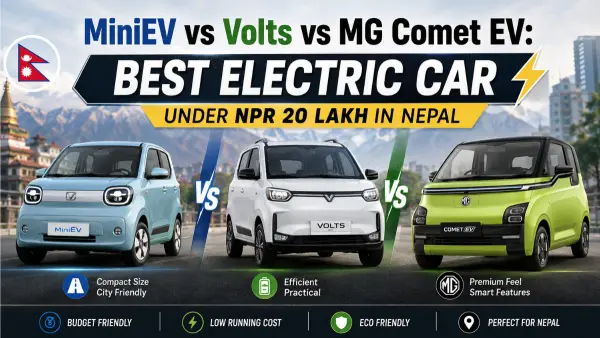
Nepal’s affordable EV market is becoming increasingly competitive. If you are looking for an electric car under NPR 20-23lakh, the series Mini EV, Henrey VOLTS Model H, and MG Comet EV are three popular choices. They are all compact cars designed for daily city driving, but each one has different strengths in terms of price, range, battery and space. This guide compares them to help you choose the best one.
Note: EV prices in Nepal may change from time to time due to budget changes and dealer updates. The prices mentioned here are based on the latest 2026 information available. Always confirm the final price with an authorized dealer.
Want to purchase the Car in Nepal under 30 Lakh ? Check out the latest prices, key specs, and features before making your decision.
What Is the Best Electric Car Under NPR 20 Lakh in Nepal?
If you’re seeking an affordable electric vehicle in Nepal, the Seres Mini EV ranks among the most affordable choices, with costs beginning at approximately Rs. 17.49 lakhs. It is a compact and straightforward electric vehicle that performs effectively for everyday urban commuting and provides excellent value for the price. The MG Comet EV begins at approximately Rs. 19.99 lakh and is slightly pricier, yet it features a bigger battery, a well-known brand, and superior service assistance. The Henrey VOLTS Model H is available for approximately Rs. 21.50 lakh, which makes it a bit pricier, yet it provides greater engine power and a more contemporary interior.
Bottom line: Choose for the Seres Mini EV if you want to minimize the purchase price and operating expenses is your primary objective. Choose the MG Comet EV if you prefer a more recognized brand, enhanced service backing, and possibly improved resale value. The VOLTS Model H is a great choice if you seek increased power and additional features for daily urban use.
Table of Contents
Quick Comparison Table — Mini EV vs Volt vs MG Comet EV
| Spec | Seres Mini EV | Henrey VOLTS Model H | MG Comet EV |
|---|---|---|---|
| Price in Nepal (2026) | Rs. 17.49–18.99 lakh | Rs. 21.50 lakh | Rs. 19.99–22.74 lakh |
| Battery | 13.8 kWh | 16.5 kWh LFP | 17.3 kWh |
| Range | 180–220 km | 205 km | 230 km |
| Motor Power | City-focused | 34 kW / 46 PS | 31.26 kW / 42 PS |
| Torque | — | 102 Nm | 110 Nm |
| Top Speed | Around 100 km/h | Around 100 km/h | 100 km/h |
| Charging | AC home charging | AC, around 5.5 hours | AC charging |
| Seats | 4 seats | 4 seats | 4 seats |
| Battery Warranty | Check with dealer | Check with dealer | 8 years / 120,000 km |
| Distributor | — | S Cube Enterprises | Pioneer Motors |
Best Electric Car Under NPR 20 Lakh in Nepal-Summary
Nepal’s electric car market has changed a lot in recent years, and buyers now have several small EVs to choose from at different prices. If your budget is around NPR 20–23 lakh, the Seres Mini EV, Henrey VOLTS Model H, and MG Comet EV are three options worth considering. All three are mainly designed for city driving, but they are different when it comes to price, battery size, range, motor power, features, warranty, and overall value.
Which One is the Best?
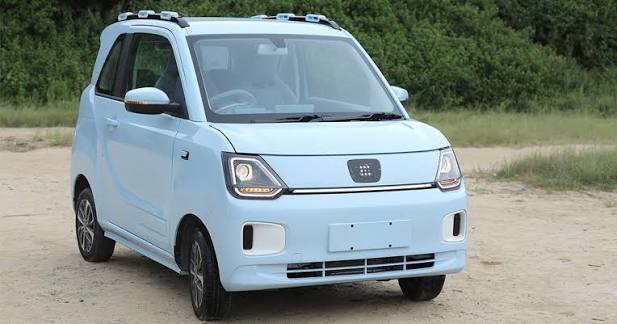
The Seres Mini EV is the best choice if your main priority is keeping the purchase price as low as possible. With a starting price of around Rs. 17.49 lakh, it is the cheapest car among these three. This makes it attractive for first-time EV buyers, students, families looking for a second car, or anyone who mainly needs a simple vehicle for daily city travel. It may not have the biggest battery or the most powerful motor, but its lower price can make a big difference for buyers who are working with a limited budget.
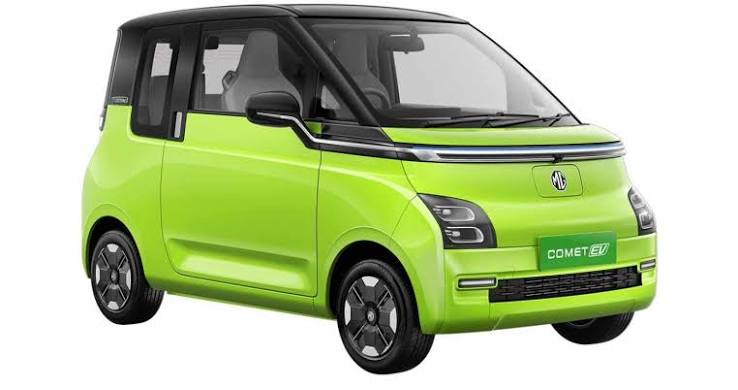
The MG Comet EV is a better choice for someone who wants a more complete package. It costs more than the Seres Mini EV, but you get a bigger battery, estimated range of up to around 230 km, a familiar international brand, and a strong battery warranty of 8 years or 120,000 km. MG also has a stronger presence in the Nepali market, which can give buyers more confidence when it comes to servicing, spare parts, and future resale. For someone who plans to keep the car for several years, these factors can be just as important as the initial price.
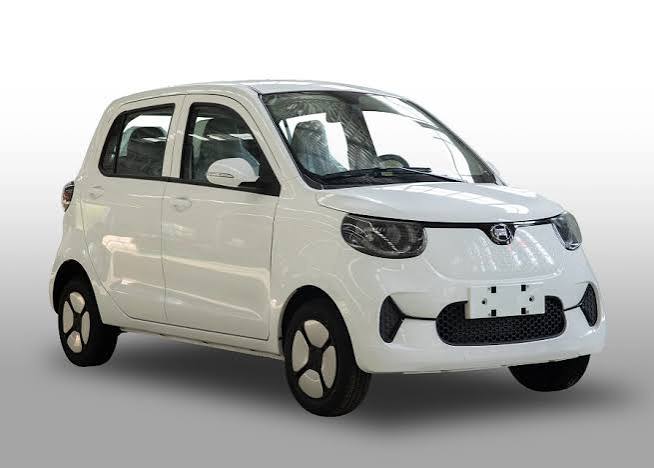
The Henrey VOLTS Model H is mainly interesting for buyers who want more motor power. It produces around 34 kW or 46 PS, which is higher than the MG Comet EV’s 31.26 kW output. This extra power can be useful when driving in busy traffic, starting from a stop, or going up small hills. However, the VOLTS Model H costs around Rs. 21.50 lakh, so it is not the cheapest option. Buyers should therefore decide whether the extra power and features are worth paying more for.
Range, Battery & Charging Comparison
When comparing the Seres Mini EV, Henrey VOLTS Model H, and MG Comet EV, battery size and range are two of the most important things to look at. All three are small electric cars designed mainly for city driving, so they are not meant to compete with larger EVs that have bigger batteries and much longer ranges. However, there are still some important differences between them.
What Is the Difference Between a Mini EV and a Hatchback EV?
A mini EV is usually a small and lightweight electric car designed mainly for short trips around the city. Cars like the Seres Mini EV and Henrey VOLTS Model H fall into this type of vehicle. They are compact, easy to park, and generally use smaller batteries. This helps keep the price lower, but it also means they are more focused on city driving rather than long-distance travel.
The MG Comet EV is also a very small car, but it has a slightly different design and feels more like a traditional hatchback. It still has a compact body and is mainly designed for urban use, but it offers a larger battery and a little more range.
In simple terms, a mini EV is mainly about low price, small size, and easy city driving, while a compact hatchback EV tries to give you a little more comfort, range, and everyday practicality while still being small enough for crowded roads.
How Far Can the Mini EV, VOLTS and MG Comet EV Travel on One Charge?
The estimated range of each car is different.
The Seres Mini EV offers around 180 km on the lower-range version and up to around 220 km on the higher-range version. The actual distance you can travel will depend on your driving style, traffic, road conditions, passengers, and use of the air conditioner.
The Henrey VOLTS Model H has a claimed range of around 205 km. However, some listings mention a more conservative real-world range, especially when the car is used on hills or with the AC running.
The MG Comet EV has a claimed range of around 230 km under ARAI testing conditions, making it the highest claimed range among these three.
It is important to remember that the claimed range and real-world range are not always the same. In normal driving, you may get less range because of traffic, AC use, hills, road conditions, driving speed, and the number of passengers. A drop of around 15–25% from the claimed figure can be a reasonable expectation, although the actual result will vary.
For example, a car claiming 230 km may not actually travel 230 km every day in Kathmandu traffic and hilly conditions. This is normal for EVs and does not necessarily mean there is a problem with the battery.
MG Comet EV Battery Capacity and Warranty in Nepal
The MG Comet EV uses a 17.3 kWh battery, which is larger than the 13.8 kWh battery found in the Seres Mini EV. One of the biggest advantages of the Comet EV is its battery warranty. The battery is covered for 8 years or 120,000 km, whichever comes first. This gives buyers additional confidence because the battery is one of the most expensive parts of an electric car. The Comet EV also comes with coverage for its high-voltage components and vehicle warranty, depending on the terms offered by the distributor.
For someone planning to keep the car for several years, a longer battery warranty can be an important advantage. It can also make the vehicle more attractive when selling it later because the remaining warranty may provide additional confidence to a second buyer.
MiniEV vs VOLTS EV vs MG Comet EV — Motor Power
Motor power is another area where these cars are slightly different.
The Henrey VOLTS Model H uses a 34 kW motor, producing around 46 PS and 102 Nm of torque. The MG Comet EV produces around 31.26 kW or 42 PS, with 110 Nm of torque. The Seres Mini EV is also designed for city use, but detailed motor specifications are not always clearly listed across dealer information.
Similarly, the VOLTS Model H has more peak power than the MG Comet EV, which can make it feel slightly stronger during acceleration. However, the MG Comet EV has more torque. For normal city driving, you probably will not notice a huge difference between them. Traffic, road conditions, tyre grip, passengers, and driving style can have just as much effect on how the car feels.
AC vs DC Fast Charging
One important thing buyers should know before purchasing any of these cars is their charging system.
The Nepal-spec versions of the Seres Mini EV, Henrey VOLTS Model H, and MG Comet EV are mainly designed around AC charging rather than DC fast charging. The VOLTS Model H, for example, uses a 3.3 kW AC charger and can take around 5.5 hours for a full charge, depending on the charging conditions.
The other two also follow the same basic idea of charging at home or at an AC charging point.
This is not necessarily a major problem if you have your own parking space and can charge the car overnight. You can return home in the evening, plug the car in, and have it ready again the next morning. However, it can become inconvenient if you regularly travel long distances and depend on fast charging. A car with DC fast charging can normally add a useful amount of range much faster than an AC-only vehicle.
So, if your main use is home-to-office, college, shopping, and other daily city trips, AC charging should be fine. If you regularly travel between cities, you should consider a larger EV with DC fast-charging support.
How to Charge a MiniEV or MG Comet EV at Home in Nepal
Home charging is one of the biggest advantages of owning a small EV.
If you have a dedicated parking space at home, you can install a suitable charging point or use the recommended household charging setup provided by the manufacturer or dealer. For daily use, the simplest routine is to plug the car in after returning home. Instead of waiting until the battery is completely empty, you can charge it whenever necessary and leave it overnight.
A typical full AC charge can take around 5–6 hours, although the exact time depends on the battery level, charger, electrical supply, and vehicle. Apartment residents should check whether their building has a suitable parking space and electrical connection for EV charging. Getting permission before purchasing the car is a good idea because having reliable home charging can make EV ownership much easier.
How to Find EV Charging Stations in Nepal
Nepal’s EV charging network has been growing, and charging stations are becoming easier to find in major cities and along important highways.
Before going on a longer trip, it is a good idea to check the location of charging stations along your route. You should also check whether the station supports your vehicle and whether it is currently working. For small AC-only EVs, planning is even more important because you cannot always rely on a quick DC fast charge.
For normal Kathmandu Valley use, home charging will probably be the most convenient option. For longer trips, however, you should plan your route around available charging points and allow enough time for charging.
What Happens to EV Range During Winter?
Cold weather can affect the range of an electric car because batteries are less efficient at lower temperatures.
In Nepal, the effect may be noticeable in colder places and during winter mornings. The amount of range lost depends on the temperature, driving conditions, heating or AC use, battery condition, and driving style. In Kathmandu Valley, the difference may not be as extreme as in very cold countries, but you can still expect some reduction in range during colder conditions.
This is especially important for small EVs because they already have relatively small batteries. If your car normally has enough range for your daily travel, a small reduction may not matter much. But if you regularly drive close to the maximum claimed range, the reduction becomes more important.
Performance & Practicality on Nepal’s Roads
Is a Mini EV Enough for a Family of Four?
All three cars can carry four people, but buyers should have realistic expectations about space.
These are compact city cars, not large family cars. Four adults can fit inside, but the space may feel tight, especially on longer journeys. For short trips around Kathmandu Valley, school runs, office travel, shopping, and daily errands, the small size can actually be an advantage. The car is easier to drive through narrow roads and easier to park.
However, if you regularly travel with four adults plus luggage, you may find these cars less comfortable. The MG Comet EV has a slightly larger overall footprint and can provide a little more usable space, but it is still a compact city car.
So, if you are buying one mainly for two people or a small family doing short city trips, these cars can work well. If you regularly travel with four adults over long distances, you should consider a larger EV.
Do Mini EVs Perform Well on Hilly Roads and Highways?
Nepal’s roads are very different from the flat roads where many small city EVs are designed to operate.
These cars can handle normal hills and slopes, but they are not designed to be high-performance mountain vehicles. When climbing hills, the motor has to work harder, which uses more battery power. As a result, the range can fall faster than it would on flat roads. Regenerative braking can recover some energy when going downhill, but it cannot completely recover the energy used to climb the hill.
For normal Kathmandu roads, these cars should be adequate. However, if you frequently travel through steep roads, mountain highways, or long uphill sections with several passengers, a larger EV with a stronger motor and bigger battery may be a better choice.
Is the MG Comet EV Good for Kathmandu–Pokhara?
The MG Comet EV can technically be used for a Kathmandu–Pokhara trip, but it is important to understand that this is not what the car is mainly designed for.
It’s estimated range is around 230 km, but real-world range can be lower depending on traffic, hills, AC use, passengers, and driving speed. Because of the distance and the hilly roads involved, you would need to plan your charging carefully. Since the car is not focused on DC fast charging, charging during the journey can take significantly longer than it would in a larger EV with fast-charging support.
For an occasional trip with proper planning, it may be possible. But if you frequently travel between Kathmandu and Pokhara, a larger EV with a bigger battery, better highway performance, and DC fast charging would be a more comfortable choice.The Comet EV is best understood as a city car that can handle occasional longer trips, rather than a long-distance highway EV.
Is the Boot Space Enough for a Family Trip?
Boot space is another area where buyers should keep their expectations realistic.
The MG Comet EV is a small car, so its luggage space is limited when the rear seats are being used. If you fold the rear seats, you can create more space for luggage, but then you lose the ability to carry passengers in the back.
For a couple going on a short weekend trip, the available space can be enough. For a family of four carrying several bags, however, space can become a problem. The Seres Mini EV and VOLTS Model H have the same basic limitation because they are also small city-focused cars.
If you regularly carry large amounts of luggage, these vehicles may not be the right choice. In that situation, it would be better to consider a larger hatchback, crossover, or SUV EV.
MiniEV vs MG Comet EV vs VOLTS — Which One Is Better?
If we look at the three cars from different perspectives, each one has its own advantage.
The Seres Mini EV is strongest when it comes to affordability. It is the car to consider if your main goal is to enter the EV market at the lowest possible price. The MG Comet EV is the most balanced option. It combines a relatively affordable price with a larger battery, longer claimed range, established brand support, and a strong battery warranty. The Henrey VOLTS Model H stands out mainly because of its motor power. It may appeal to buyers who want a little more power from a small city EV.
So, there is no clear winner in every category. Your choice depends on what matters most to you.
Common Problems, Risks & Buyer Concerns
Common Concerns With Mini EVs in Nepal
Small and affordable EVs can be excellent city cars, but there are some things you should consider before buying.
The first concern is real-world range. The number shown in advertisements is usually a test figure, and actual driving range can be lower. Using AC, carrying more passengers, driving uphill, and driving at higher speeds can all reduce range. The second concern is service and spare parts. Established brands generally have more experience and a larger service network, while newer or smaller brands may have fewer service locations.
The third concern is AC-only charging. If you have home charging, this is not a big issue. But if you depend on public charging, slower charging can become inconvenient. Finally, the compact size that makes these cars great for city driving can also limit their usefulness for families, luggage, and long highway trips.
Which EV Could Have the Best Resale Value?
Resale value is difficult to predict because it depends on future EV prices, battery condition, demand, service history, new models, and government policies.
However, the MG Comet EV may have an advantage because MG is a more established automotive brand and has a stronger presence in the Nepali market.A wider dealer and service network can make buyers more comfortable purchasing a used car. The long battery warranty can also be attractive to a second owner, depending on the warranty transfer conditions.
The Seres Mini EV and VOLTS Model H may still have good resale demand, especially if their prices remain competitive, but there is less long-term market history to judge their resale performance. If resale value matters a lot to you, it is worth asking dealers about the current used-car demand and checking the prices of older models before buying.
Which EV Has the Lowest Running and Maintenance Cost?
One of the biggest reasons people choose EVs in Nepal is the lower running cost compared with petrol or diesel vehicles. Electric motors have fewer moving parts than traditional internal-combustion engines. You do not need engine oil changes, spark plugs, or many of the other engine-related maintenance items found in petrol cars. Your main running cost will be electricity used for charging, along with tyres, brakes, servicing, and other normal vehicle expenses.
The exact monthly charging cost depends on how many kilometres you drive and the electricity rate you pay. Someone who drives only 20–30 km a day will naturally spend much less on charging than someone driving 80–100 km every day. Between these three EVs, the maintenance difference may not be huge. The bigger differences are likely to come from the price of parts, service availability, warranty coverage, and the cost of any repairs outside warranty.
How to Buy(Dealers, EMI & Test Drives)
Where to Buy the MG Comet EV in Nepal
The MG Comet EV is sold in Nepal through the authorized MG distribution network. Buyers should contact the official MG Motor Nepal channel or an authorized showroom to confirm the current price, available variants, offers, warranty terms, and stock. Before making a booking, ask the dealer for the complete on-road price, because the final amount can include registration, insurance, road-related charges, and other costs.
You should also confirm exactly what is included in the advertised price.
How to Apply for an EV Loan in Nepal
If you are planning to finance your EV, the first step is to compare different banks and financial institutions. Many banks provide vehicle loans, and some offer specific financing options for electric vehicles. The interest rate, maximum loan amount, down payment, and repayment period can differ from one bank to another. You will generally need documents such as your citizenship identification, income-related documents, and the quotation or proforma invoice from the vehicle dealer.
After choosing the car, ask the bank to calculate your monthly EMI based on the exact amount you plan to borrow. Do not choose a loan simply because the monthly EMI looks low. A longer loan period can reduce the monthly payment but may increase the total interest you pay over time.
What Should You Check Before Buying?
Before booking any of these EVs, take the car for a proper test drive instead of making the decision only from online specifications. During the test drive, check how comfortable the seats are, how easy the car is to drive in traffic, how well it handles speed bumps, how much space is available in the rear seats, and whether the boot is large enough for your normal needs.
You should also test the air conditioning because Kathmandu traffic can be slow and crowded, and AC use can affect EV range. If possible, drive the car on both smooth roads and rougher roads. Check how it feels when going uphill, how easy it is to park, and whether the steering and brakes feel comfortable.
Final Takeaway
The Seres Mini EV, Henrey VOLTS Model H, and MG Comet EV are all interesting choices for buyers looking for a small electric car in Nepal. They are especially suitable for people who spend most of their time driving inside cities and want lower running costs than a petrol car.
The Seres Mini EV makes the most sense if your main goal is affordability and simple city transportation. Its compact size, lower price, and reasonable range make it attractive for buyers who do not need a large car.
The Henrey VOLTS Model H is worth considering if you want more motor power and prefer a slightly stronger driving experience. Its higher price, however, means you should compare it carefully with the MG Comet EV before deciding.
The MG Comet EV is probably the most balanced choice of the three. It offers a larger battery, the highest claimed range, strong battery warranty coverage, and the support of a better-known brand. For buyers who want to keep their EV for several years and care about warranty and after-sales support, these advantages can be important.
At the end of the day, the best EV depends on how you actually use your car. If you mainly travel around Kathmandu, charge at home, carry one or two people, and want the lowest possible purchase price, the Seres Mini EV can be enough. If you want more power, the VOLTS Model H deserves a look. If you want a more complete package with better range, warranty, and brand support, the MG Comet EV is the safer overall choice.
Before booking any of them, make sure you check the latest price, warranty, charging equipment, service availability, spare-parts availability, and final on-road cost with the authorized dealer. EV prices and offers in Nepal can change, so the advertised price should always be treated as a starting point rather than the final amount you will pay.
Frequently Asked Question
1. What is the best electric car under NPR 20 lakh in Nepal?
The Seres Mini EV is one of the most affordable electric cars in Nepal, starting at around Rs. 17.49 lakh. It is best suited for buyers who mainly need an affordable EV for daily city driving.
2. Which is better: Seres Mini EV, Henrey VOLTS Model H, or MG Comet EV?
It depends on your priorities. The Seres Mini EV is best for affordability, the Henrey VOLTS Model H offers more motor power, while the MG Comet EV provides a more balanced package with a larger battery, longer claimed range, established brand support, and an 8-year/120,000-km battery warranty.
3. What is the price of the Seres Mini EV in Nepal?
The Seres Mini EV starts at approximately Rs. 17.49 lakh, with the listed price range reaching around Rs. 18.99 lakh depending on the version.
4. What is the range of the MG Comet EV in Nepal?
The MG Comet EV has a claimed range of around 230 km under ARAI testing conditions. Real-world range can be lower depending on traffic, hills, air-conditioning, passengers, road conditions, and driving style.
5. How long does it take to charge these small EVs?
The Nepal-spec versions primarily use AC charging. The Henrey VOLTS Model H, for example, uses a 3.3 kW AC charger and can take around 5.5 hours for a full charge. A typical full AC charge can generally take around 5–6 hours, depending on charging conditions.
6. Can the MG Comet EV travel from Kathmandu to Pokhara?
It can technically be used for a Kathmandu–Pokhara trip, but careful charging planning is necessary. Because its real-world range can be lower than the claimed 230 km and it is not primarily designed for DC fast charging, a larger EV with a bigger battery and faster charging would be more suitable for frequent Kathmandu–Pokhara travel.
7. Are Seres Mini EV, VOLTS Model H, and MG Comet EV suitable for a family of four?
All three can carry four people, but they are compact city cars and may feel tight with four adults, particularly on long journeys. They are more suitable for short city trips and smaller families.
8. Do these mini EVs perform well on hilly roads in Nepal?
They can handle normal hills and slopes, but steep roads and long uphill sections consume more battery power and can reduce range. Buyers who frequently drive on steep mountain roads may be better served by a larger EV with a stronger motor and bigger battery.
9. Which of these EVs has the lowest running and maintenance cost?
All three can have relatively low running and maintenance costs compared with petrol or diesel cars because EVs have fewer moving parts and do not require engine oil or spark-plug changes. The actual cost depends on electricity usage, servicing, tyres, brakes, parts, and repairs.
10. Which EV is likely to have the best resale value in Nepal?
The article suggests that the MG Comet EV may have an advantage because MG is an established automotive brand with a stronger presence in Nepal. However, future resale value depends on factors such as battery condition, demand, service history, future EV prices, and government policies.
Nepali car Nepal first trusted Car News, Reviews, Prices & Information.
From idea2grow